

The Way of St Francis from La Verna to Assisi
The Way of St Francis from La Verna to Assisi
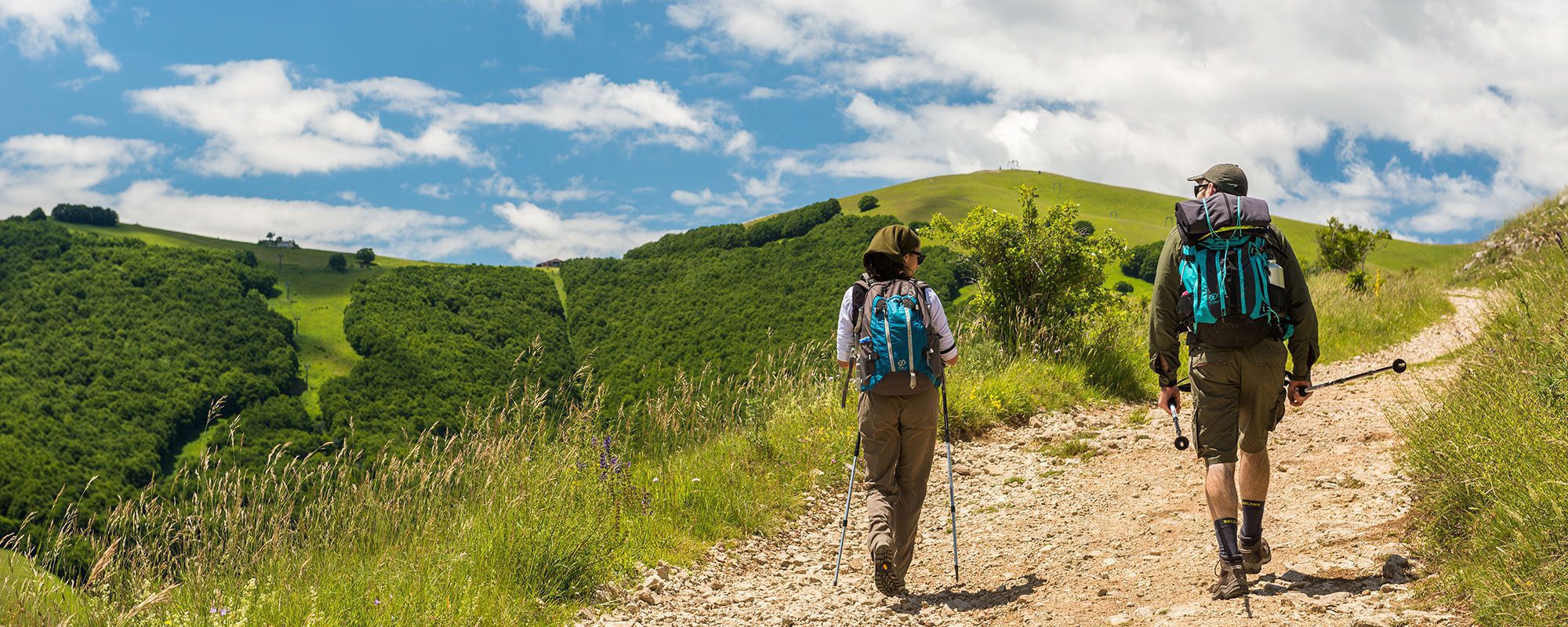
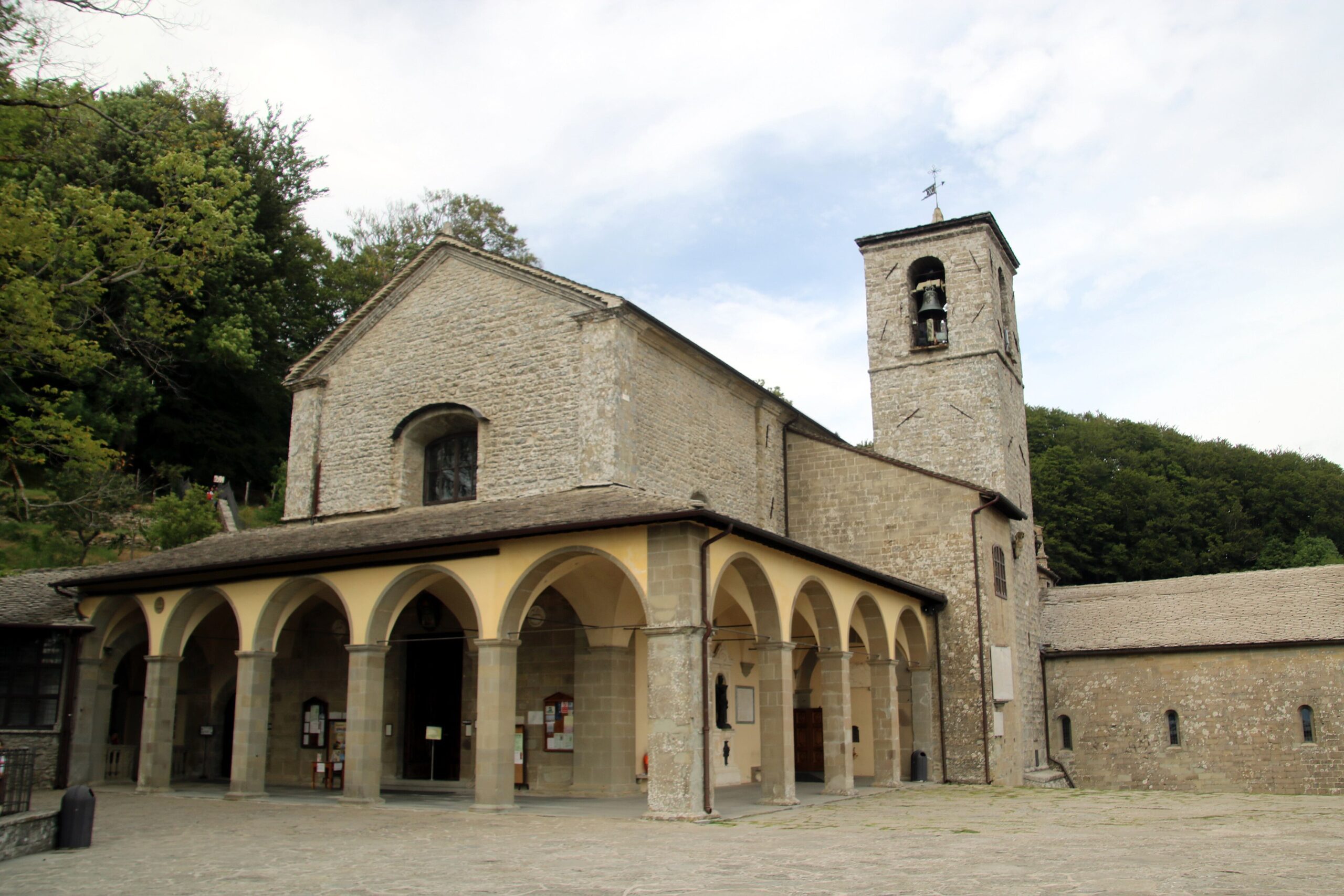
“Non est in toto sanctior orbe mons” (There is no mountain more sacred in the whole world) reads an inscription inside the sanctuary. La Verna is not only the starting point of this adventure, but one of the most sacred and captivating places along the entire route. Following in the footsteps of St. Francis, you will discover magnificent places surrounded by greenery, enchanting towns and ancient villages, before arriving in St. Francis' birthplace, Assisi, where this unforgettable experience will come to an end!
Availability: you can participate any month of the year
Duration: 11 nights and 10 days
Services included:
- Half board
- Luggage transport
- Transfers as specified in the programme
- Pilgrim's credential
- Cancellation, medical and luggage insurance
- Digital maps in GPX format
- Telephone assistance from Francesco's Ways
Extra services:
- Packed lunch
- Hiking guide
- Transfers not included in the programme
- Anything not specified in ‘Services included’
Price per person:
- Starting from €1,275.00 per person in a double room
- Single room price on request
Itinerary
PROGRAMME
DAY 1 - Arrival at the Sanctuary of La Verna
Arrival at La Verna. La Verna is not only the starting point, but also a place steeped in spirituality, one of the most intense and moving of the entire Franciscan itinerary. It is worth arriving a day before the start of the walk to immerse yourself in the silence and sacredness of the sanctuary, letting yourself be inspired by the places that deeply marked the life of St. Francis.
DAY 2 - Stage 1 - from La Verna to Pieve Santo Stefano
The first stage is of intermediate difficulty: the ascent is gradual, but there are two more challenging sections - on Monte Calvano and Monte Modina - ideal for starting to train your body and breathing in preparation for the long journey to Assisi. The first 7 kilometres pass through lush, shady woods, to be covered at a leisurely pace, letting yourself be guided by the tranquillity of nature.
The last 8 kilometres descend gently along a clear, easily passable dirt road, which leads to the end of the stage. Once you reach Pieve Santo Stefano, you will find yourself in a unique place: known as “the city of diaries”, it houses a precious public archive of personal writings – letters, diaries, memoirs – in which the anonymous voices of everyday life intertwine with the collective history of the country. Perhaps this is an invitation to start your own walking diary, collecting thoughts, emotions and encounters along the way to Assisi.
DAY 3 - Stage 2 - from Pieve Santo Stefano to La Montagna
Every journey has a daunting challenge, a stage that seems insurmountable. But it is precisely there, where everything seems most difficult, that the greatest satisfaction is revealed: that of having made it.
Face the day with calm and determination, setting off at dawn and allowing yourself a slow and steady pace. If necessary, consider shortening the stage by stopping at one of the intermediate points available along the route. The first part of the journey is dominated by a long and challenging climb. A few kilometres from the main path, the Eremo del Cerbaiolo offers a precious opportunity for a spiritual break (it is advisable to check the opening hours in advance).
From Viamaggio, about 10 kilometres from the start, one of the toughest stretches begins: a steep climb through the woods, which once marked the “Gothic Line”, the German defensive barrier erected in 1944 to counter the advance of the Allies. Today, instead of war memories, you will encounter deer, roe deer and other inhabitants of the Alpe della Luna Reserve, in a wild and silent environment that recalls the praises of nature sung by Francis of Assisi. Among centuries-old trees and mountain landscapes, the Hermitage of Montecasale is an ideal retreat for rest and contemplation. Here, where Francis passed through and transformed three thieves into new men, his presence and message of peace can still be felt.
DAY 4 - Stage 3 - from La Montagna to Sansepolcro
The route continues downhill towards Sansepolcro, whose name derives from two pilgrims who, upon returning from the Holy Land, founded a monastic community here. The town is a treasure trove of beauty and houses precious works by Piero della Francesca, Rosso Fiorentino and other Renaissance artists.
DAY 5 - Stage 4 - from Sansepolcro to Citerna
The door of Sansepolcro Cathedral is carved with the classic figure of a pilgrim, with staff and knapsack, symbolising a timeless bond between the spiritual travellers of yesterday and today. The route, which takes about four hours, winds mainly through flat terrain between cultivated fields and old farmhouses. When leaving the city, it is necessary to pay attention to traffic, but after less than 3 kilometres, you will be walking on rural roads, entering the land of St. Francis: Umbria. Here, the climbs become gentler and the landscape takes on a more peaceful tone. The village of Citerna, considered one of the most beautiful in Italy, is located on a hill in the Upper Tiber Valley and is characterised by defensive structures used as watchtowers. In the historic centre, it is worth visiting the Church-Museum dedicated to St Francis (don't miss the fascinating story of the discovery of Donatello's Madonna); the Church of St Michael the Archangel, which houses Pomarancio's precious Crucifixion and a Madonna and Child from the Della Robbia school; finally, the unique medieval walkway along the walls is worth exploring.
DAY 6 - Stage 5 - from Citerna to Città di Castello
The route winds its way through horse chestnut trees, oaks and downy oaks, with gentle climbs and descents without overly challenging gradients. Along the way, there are rest areas and water sources, including a buffalo farm known for producing excellent fresh mozzarella. Once you reach the crest of the hill in Le Burge, you can enjoy a 180-degree panoramic view of the Tiber Valley and Umbria, a mosaic of hills, hilltop villages, woods and ancient churches. Some sections are exposed to direct sunlight, so it is essential to bring a hat and a good supply of water. In the village of Lerchi, you will pass by the “Archeologia Arborea” foundation (open to visitors by appointment), which preserves ancient varieties of native fruit trees, contributing to the preservation of local biodiversity. Along the way, a votive shrine and an iron cross mark the presence of the Franciscan Hermitage of Buon Riposo, so named because St Francis stopped here. The last part of the stage leads downhill to the sober but elegant façade of the Cathedral of Città di Castello, the destination for pilgrims heading to Assisi. The city boasts a long artistic tradition, with important works of art, historic buildings and monumental churches such as the Cathedral, San Domenico and San Francesco. It is also the birthplace of Alberto Burri, one of the most famous Umbrian artists of the 20th century, whose works are exhibited in two city museums. Also worth visiting is the Diocesan Museum, which houses the Treasure of Canoscio, one of the oldest collections of early Christian liturgical objects.
DAY 7 - Stage 6 from Città di Castello to Pietralunga
Leaving Città di Castello, the route winds through woods and sunny stretches until it reaches Pietralunga. After about 6 km, you arrive at Il Sasso, the last chance to stock up on water and food before a long climb followed by a descent towards Pieve de' Saddi, the ancient spiritual centre of the Upper Tiber Valley. The route continues through valleys and quiet fields, alternating between climbs and descents, with various rest areas to recover your strength. The arrival in Pietralunga, a small, welcoming and peaceful Umbrian village, repays the effort. This is a long stage to be tackled without haste: save your energy for the last stretch, with a descent and then a final climb.
DAY 8 - Stage 7 from Pietralunga to Gubbio
The route winds easily through woods and clearings with panoramic views, until it reaches a stretch of coniferous trees before arriving at the Gubbio plain, where fields and poplars shape the agricultural landscape. In Loreto, the landscape changes: the woods give way to cultivated fields and villages. At the church of San Giovanni Battista (usually closed, but with a caretaker available), you can enjoy a break in the shade before descending towards Abbadia di Piazza. Here, the route continues on asphalt, among majestic oaks and long sunny stretches, to the “Fonte del pellegrino” (pilgrim's fountain), a recent gift to walkers. The arrival in Gubbio is exciting, not only for the beauty of the city, but also for its deep connection with St. Francis. The walk ends in front of the church dedicated to him, where a statue depicts him with the wolf, symbol of the famous miracle.
DAY 9 - Stage 8 - from Gubbio to Biscina
The original stage would be from Gubbio to Valfabbrica, but as it is a long and demanding stage (36 km), it is divided into two stages. On this road, Francis proclaimed himself “herald of the Great King” in front of the brigands and was then welcomed, with difficulty, to the Abbey of Vallingegno, where he began to serve in the kitchen. His challenges inspire every pilgrim who retraces his steps. Leaving Gubbio, you walk carefully on asphalt, then on dirt roads, climbing up to the ridge from which you can say goodbye to the city. The route continues through woods, hills, castles and glimpses of Mount Subasio. At the Madonna delle Grazie, a small church dear to travellers, you can stop for a moment of reflection. You then climb towards the Hermitage of San Pietro in Vigneto, with a fountain inside, and after a descent you reach Caprignone, another resting point in the shade. The climb to Castello di Biscina is tiring, but there you will find the last source of water before the long final descent, sunny and on asphalt, towards Valfabbrica. Along the way, you will also come across the charming Pieve di Coccorano.
Valfabbrica, like a “Franciscan Monte do Gozo”, invites you to reflect on your imminent arrival in Assisi and your encounter with the tomb of the Saint.
DAY 10 - Stage 9 - from Biscina to Valfabbrica
The climb to Biscina Castle is tiring, but there you will find the last source of water before the long final descent, sunny and on asphalt, towards Valfabbrica. Along the way you will also come across the charming parish church of Coccorano.
Valfabbrica, like a “Franciscan Monte do Gozo”, invites you to reflect on your imminent arrival in Assisi and your visit to the tomb of the Saint.
DAY 11 - Stage 10 - from Valfabbrica to Assisi
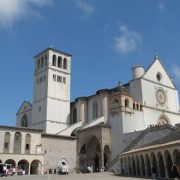
The last stage begins in the silence of the woods, then, from Pieve San Niccolò, the landscape opens up among vineyards and olive groves, announcing the proximity of Assisi. The route is varied: climbs, descents, a few steep sections, but the approaching destination sustains every step. Suddenly, Assisi appears, with the majestic profile of the Sacred Convent and Basilica: it is one of the most touching moments of the entire journey. Shortly before arriving, at Ponte de Galli, you can choose to cross the Bosco di San Francesco, an evocative alternative to the paved section.
You enter the city through Porta San Giacomo, the same gate from which pilgrims departed for Santiago.
The Basilica of St Francis, illuminated by the sun, welcomes those who arrive. It is the long-awaited moment: once you reach the tomb of the saint, you can pause in prayer in the dim light of the eternal lamp.
Next to it, at the Statio Peregrinorum, you can collect the Testimonium (for those who have walked at least 100 km) or the Chartula Peregrini, to preserve the memory of this journey.